2

Unraveling the catalase dynamics: Biophysical and computational insights into co-solutes driven stabilization under extreme pH conditions
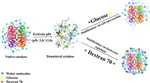
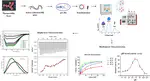
Catalase plays a vital role in eliminating toxic peroxides from the human body and the environment. The versatile applications of this enzyme extend across biotechnological industries and innovative bioremediation approaches. Nonetheless, ensuring enzyme stability is a challenging task. This study investigated the efficacy of co-solutes (glucose and dextran 70) as stabilizing agents for catalase under denaturing pH conditions by employing a combination of spectroscopic techniques (UV‐visible, circular dichroism, and Trp fluorescence), calorimetric measurements (DSC and ITC), enzymatic assay, and in silico studies. The results of spectroscopic and thermal stability studies indicated that the co-solutes tend to stabilize catalase, even under extreme pH conditions. Molecular docking and ITC findings showed that glucose has a higher binding tendency to catalase than dextran 70. MD simulations further underscore reduced structural deviations (RMSF and RMSD), compact structure (Rg and SASA), and formation of H-bonds between catalase and co-solutes, complementing the in vitro observations. This study contributes to the understanding of enzyme stability under suboptimal pH conditions and paves the way for the development of more robust enzyme formulations suitable for a range of applications.
Unraveling the catalase dynamics: Biophysical and computational insights into co-solutes driven stabilization under extreme pH conditions
Natural Compound Toxicity: An Egregiously Overlooked Topic
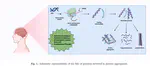
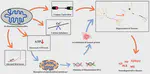
Aggregates have a variety of sizes and other physicochemical characteristics, making them diverse. As a direct consequence of this, a single technique is not merely sufficient to adequately analyze all the properties of aggregate particles. The findings acquired with one approach are inextricably related to those procured with another since every technique measures a different prospect of the enormous characteristic of aggregates. Development in protein aggregation research is driven by numerous approaches, including the structural study of protein aggregation. Besides, using numerous biophysical studies, the structural properties of amyloid at the insoluble and solvable processes have been reviewed, however, further research on the intermediate stage of the aggregated proteins is still under consideration. Herein, a short description of protein aggregation’s structural analysis strategies using various biophysical techniques has been discussed. Using Fluorescence spectroscopy, FTIR, NMR, and CD, structural modifications during protein aggregation can be understood which will help in developing therapeutics for many diseases induced by protein aggregation. Thus, along with other multidisciplinary methods, the insights obtained using these strategies will advance our level of awareness of protein aggregation and misfolding and related therapeutics for neurodegenerative diseases as well.
Natural Compound Toxicity: An Egregiously Overlooked Topic
Probing protein aggregation through spectroscopic insights and multimodal approaches: A comprehensive review for counteracting neurodegenerative disorders
Aggregates have a variety of sizes and other physicochemical characteristics, making them diverse. As a direct consequence of this, a single technique is not merely sufficient to adequately analyze all the properties of aggregate particles. The findings acquired with one approach are inextricably related to those procured with another since every technique measures a different prospect of the enormous characteristic of aggregates. Development in protein aggregation research is driven by numerous approaches, including the structural study of protein aggregation. Besides, using numerous biophysical studies, the structural properties of amyloid at the insoluble and solvable processes have been reviewed, however, further research on the intermediate stage of the aggregated proteins is still under consideration. Herein, a short description of protein aggregation’s structural analysis strategies using various biophysical techniques has been discussed. Using Fluorescence spectroscopy, FTIR, NMR, and CD, structural modifications during protein aggregation can be understood which will help in developing therapeutics for many diseases induced by protein aggregation. Thus, along with other multidisciplinary methods, the insights obtained using these strategies will advance our level of awareness of protein aggregation and misfolding and related therapeutics for neurodegenerative diseases as well.
Probing protein aggregation through spectroscopic insights and multimodal approaches: A comprehensive review for counteracting neurodegenerative disorders
Identification of Thermostable Xylose Reductase from Thermothelomyces thermophilus A Biochemical Characterization Approach to Meet Biofuel Challenges
The pentose sugar d-xylose is the predominant hemicellulosic compound, which comprises about one-third (25–35%) of the total carbohydrates present in the lignocellulosic biomass, which remains unutilized due to a lack of an optimized enzymatic method of xylose metabolism. Lignocellulose is renewable, and this low-cost carbohydrate is potentially attractive for producing useful chemicals (xylitol) and biofuel (bioethanol). The large-scale manufacturing of ethanol necessitates the efficient conversion of xylose from lignocellulosic feedstock. Thermostable organisms can be a potential source of thermostable enzymes for commercial and scientific interests. Therefore, T. thermophilus (a thermophile fungus) is explored as the alternative source of the thermostable enzyme xylose reductase. After heterologous expression in E. coli, purification of the native form of xylose reductase, which is thermostable, was done for the first time. Finally, the biochemical characterization of xylose reductase at different pH and temperature conditions was enumerated using various biophysical techniques. This study summarizes current information regarding yeast xylose reductases and the many ways used to provide an environmentally benign and long-term alternative source of XR for lignocellulose biomass consumption at higher temperatures in the fermentation sector. This study concludes that as far as its activity is concerned, xylose reductase works best around pH 7 and 45 °C. This information is very useful for industry as the temperature of fermenters containing heat-treated lignocellulose biomass is usually high and frequently affects the percentage yield of the final product.
Identification of Thermostable Xylose Reductase from Thermothelomyces thermophilus A Biochemical Characterization Approach to Meet Biofuel Challenges